Big goals, small change
Download MP3Mack Male:
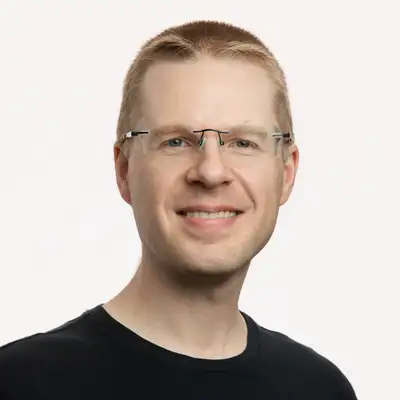
Big goals, small change. This week we speak with Mike Mellross of Alberta Ecotrust about Edmonton's updated climate priorities and the important decisions coming up during the four-year budget. We talk climate ambition, competing pots of funding and why good city building might be climate action too. Hi, I'm Mack, and this is Speaking Municipally. Welcome back to Speaking Municipally, episode 371. Stephanie is still away. She'll be back in a couple of weeks. And so once again, you'll have to make do with just me. Well, me and our guest. More on that in just a moment. This episode is brought to you by LitFest, Canada's original nonfiction festival. LitFest celebrates the power of true stories, and we're big fans of true stories at Taproot. The festival runs Oct. 14 to 18, turning downtown Edmonton into a creative hub for readers and writers. Discover a new favourite book or author through readings, panel discussions and workshops inspired by this year's theme: "Nonfiction shows us who we are." Taproot's own Karen Unland will be hosting a conversation with Patrick Lennox about his book *On Treason: Alberta Separatism, Foreign Interference, and Canada's Survival in a Revolutionary Age*. That's on Oct. 15. And that's just one of many sessions of interest. There's something for everyone at LitFest. Learn more and get your tickets at litfestalberta.org. That's litfestalberta.org. Okay, my guest this week is Mike Mellross, vice-president of Alberta Ecotrust Foundation and a former leader of Edmonton's energy transition work. He spoke at executive committee on Sept. 2 about the city's climate priorities for 2027 to 2030. And Alberta Ecotrust has two $5-million funding requests headed into the four-year budget discussions. So in the interview, we get into what that money would do, why the city might want to work through a charity like Alberta Ecotrust and whether Edmonton is thinking big enough when it comes to climate. Mike, welcome to Speaking Municipally.
Mike Mellross:
Thank you.
Mack:
All right, maybe first of all it would be good to just get a sense of what is Alberta Ecotrust, what do you folks do and maybe what your role is with the organization?
Mike:
Sure. Alberta Ecotrust is a charitable organization. We've operated in Alberta for well over 30 years. And the origin story, it's a very interesting story. It comes about because of a partnership between the corporate oil and gas sector and the environmental community at the time in the early '90s. And largely the organization was there to convene some difficult conversations about what was happening in the oil and gas sector and what kind of environmental mitigations could be applied to really improve what was going on there. Very quickly, the organization, though, evolved into a trust. And what that really means is that we received corporate donations, philanthropic contributions and even individuals like you and me, giving the $5 a month to the organization. And then we aggregated those dollars and then we redistributed them through a grantmaking process to environmental organizations, not-for-profits and charitable organizations, to do good environmental work. And that was everything from water quality monitoring to conservation efforts to air quality to climate. It was across many different focus areas. So through the years, we've really been primarily a funder and a grantmaker, applying this United Way-style model where we would receive all these donations and redistribute them accordingly. Very close partnership again with the oil and gas corporate sector. You know, that's definitely been modified over the years. You know, there's less and less of that connection. But really we've been able to scale up our operations significantly. In around 2019-20, we received a one-time cash contribution from the federal government in the form of an endowment and it amounted to be about $38 million. And it was specifically designed to assist the City of Calgary and the City of Edmonton in achieving its climate action plans. So it was a very innovative ask to the government that was actually led surprisingly enough by the City of Edmonton. There is a bit of lack of institutional memory, I think, on that history, which I continually have to remind them of. But so, really, they were integral to it. And really it was back in the days of Don Iveson and council. But you know who carried the torch actually and signed on the dotted line — when he was with the federal government — was Amarjeet Sohi. And he continued that on back when he became mayor as well. So we had a very close relationship with him with Low Carbon Cities Canada centre is really what it's called. And we operate in Calgary and Edmonton. And the last six years, we've been working with the two cities through different delivery models to try to achieve, you know, really great things around climate mitigation and resilience.
Mack:
Okay, that's a really good overview. What about you specifically? What's your role with the organization?
Mike:
Well, currently I am the vice-president. So you know, a lot of the sort of mechanics of the organization, but I am a practitioner in the space. I've actually worked in the climate and environmental management space for over 30 years. And a lot of that time was with the City of Edmonton. I actually managed the energy transition group and the utility supply group for many years. I actually worked for the city for 16 years, little bit of time with the city of St. Albert as a bit of a break. And I sort of did the boomerang. I did the City of Edmonton boomerang back there for a while. Yeah, so it's been a long history for myself as well.
Mack:
Yeah, you've got a lot of experience in the industry then. Just take us back to that endowment and that decision. Like, why — for people who are watching, this is going to help us, I think, understand some things later on in this conversation. Why would the federal government give that money to Alberta Ecotrust instead of directly to Edmonton and Calgary if it's for the cities to do their work?
Mike:
Yeah, that's a very good conversation and kind of how it came about was the originator of the model. And often many cities through the years have said, I wish I had this organization. And the organization I'm talking about is called now the Atmospheric Fund. It used to be called the Toronto Atmospheric Fund and it was started in a very similar time frame to Alberta Ecotrust. I think it was 1991 and it was started through a contribution by the city of Toronto to an endowment fund that started really Canada's first urban climate change agency. And that organization was designed to specifically tackle climate change mitigation programs and projects. And there was this thought that a third-party agency will be more adaptive, more nimble, more connected to the community. You know, we really lack the bureaucracy that the city has. I think we've actually proven out that we can be quite nimble and adaptive, but still take its primary direction from the mandate itself, which is to achieve emissions reductions and climate resilience in the city in which you operate. So I think we're very important and it was recognized back in the day, it's very important to have sort of a civil society representative that is a liaison to the business community, a liaison to the community itself, various organizations operating in this space and not controlled perhaps by the significant risk management of the cities themselves.
Mack:
Yeah, I think that makes a lot of sense. It's very interesting though, right? Because there's all these kind of middlemen organizations, for lack of a better term, not just in climate, but across the portfolios that the city, you know, does business in. And sometimes it seems to make a lot of sense. There's a lot of benefits, as you've outlined, to doing it that way. And other times it just feels like, wouldn't it be faster if the city just did that directly? I'm sure that conversation comes up in your work.
Mike:
It does, but I think the model, again, I've been doing this for six years now and I'm consistently shocked by how well this model can work. There are advantages to having an external agency to the city do this work. One of them is actually leverage. We've been able to do that surprisingly well in terms of every dollar the city contributes to us. We are able to crowd in other sources of funding. That's philanthropic funding. A philanthropic organization is not going to fund the city. That's individual donations, that's corporate donations, actually, as well. Again, they're not going to fund the city. So we have some you know, pretty solid numbers on our programming where, you know, depending on the program, it can be one to three, it can be one to six leverage. We've even gone as high as nine to 12 on some of our grant programming. So that in itself is a really strong component of the model. But, you know, the other thing is that we're not restricted by some of the rules — not to say that those rules are wrong for the city, it's just that you know they exist in the city and they don't exist for us. And when you manage an endowment, one of those things is that we actually do look for market-adjusted rates of return. So we actually get a return on investment. The city would have a hard time doing that, getting that return on investment and then redistributing that money out for community programming. We look for return on investment. And then we have a really, really specific direct impact that we look for, like we have a carbon hurdle, we look for community co-benefits. So we can operate kind of in that venture capital space quite a bit easier than the city would.
Mack:
Well, Mike, we're mainly here to talk today about Edmonton's updated 2027-2030 climate priorities. This came up at executive committee on Sept. 2 and you were there to speak to it. I understand this week at city council they've now approved the recommendation from executive committee. So things are moving forward. You spoke to the committee though. What was your message to city council?
Mike:
What we really were advocating for was what was outlined in the priorities document, which is you know, this partnership model, about investing in community organizations, contributing to not-for-profits and charitable organizations to really be a trusted adviser and a critical delivery partner on this work. So I focused most of our messaging around that and kind of the things that Alberta Ecotrust was already doing and you would be able to leverage what we're doing and basically a contribution to us would allow us to scale that up, sustain that effort, you know, definitely help to move it forward and advance it a lot faster. So I was focusing in on that. I really looked at a few elements of the plan that tie directly into our work. Action three was one of them and that's around the building sector and we have a number of programs right now that's focused on that. And then I also looked at some of the waste granting, you know, we're a professional grantmaker. We've been doing it for over 35 years. Certainly, I think we could assist on those types of things as well. So those were the specifics of it. One of the things that I do do when I go to council, which I've done over the years a few times, is you know, I work very closely with the administration. And you know, there is some expertise there for sure. There's really, you know, great people working there and doing some good work. But I'll often put on my critical hat a little bit and say, hey, you know, maybe think about this a little bit. And one of those things — and I struggle with this when I see things go to council actually just as a resident of Edmonton — I don't know, sometimes I don't understand how councillors can do it because there's such a high-level amount of information that comes to them. All I do is crave for more detail all the time, but I know there's only so much you can get in these reports. But so I really couldn't really tell you what was the impact of a lot of those actions. So I did ask council to think about, you know, get administration to do a more detailed implementation plan, the who, what, where, how, what's the schedule, those types of things. And I realized actually the rest of the speakers really picked up on that as well. So we're not the only ones.
Mack:
Yeah, it did seem like a common thread amongst the speakers to say, you know, having a list of ideas is not really an implementation plan. You need accountability, you need funding, you need timelines and all that kind of stuff. I think that came through in your message. The other thing I heard you say was that more ambition is required, right? So what do you mean by ambition on this? Like what does greater ambition look like?
Mike:
Right. So, you know, I guess that's a little bit of a function of my history with the city itself as well. And over the years, you know, we went from, you know, kind of just having a few words on a page and not a lot of budget associated with it to really getting an amplification. I would say it was again during the Mayor Iveson years. We were able to really put forward some aspiration in the plan. And I think what happened or what happens in this sort of four-year priorities plan — and they do actually indicate in one of the attachments on how they kind of set out the targets and which actions they were going to pursue. And they basically say these are the easily implementable ones. So using that as a filter, you're going to immediately get rid of the things that are hard. And unfortunately, the hard things are often the most impactful things that the city should do and needs to do in order to really achieve these deep decarbonization targets. As far as I can tell, nobody wants to walk away from these targets. They make a lot of sense in context of society. So, like an example of that though is like it does talk about updating the design guidelines for the city and the standards. You know, that is incredibly impactful if you do that correctly and if you're bold as well, because you know, there's a lot of voices out there. But you could really change how communities are designed. And so, you know, where's the listing of all of those things that you're going to consider there? And they may be hard things to do and certainly require a lot of engagement. But I think a lot of those things kind of fell off a little bit, or big kind of investments too. The other things that were always on the list were — and now, did they ever really invest at the scale that we hoped they would in terms of changing the whole I guess approach or conversation to climate change action? Probably not, but it was working up that way. But you know, there's a lot of things that could be put in there like infrastructure improvements, like deep decarbonization of the fleet, deep incentives and those types of things for retrofits in the community. Things like even district energy support. Like it's just not clear like the scale at which a lot of those actions are going to occur at. So the aspiration and the hard things I think were missing.
Mack:
Yeah, and the context for those hard things is that we're behind, right? We're off track.
Mike:
Well, again, I'm just going to repeat what administration had in its report. And yes, we're well off track for achieving a trajectory to a carbon-neutral 2050. Emissions are going back up. You know, even on the resilience side too. I really, really do laud the city for putting in some kind of a target on community resilience and climate change adaptation. But that target is pretty modest, I think, in the end, really, because that also requires a full reinvention of the city that we live in to fully address. So I think, yeah, the plan, the four-year priorities plan, I get how they put it together, but it's not necessarily coincident with the challenge in front of us.
Mack:
Yeah, I think that's been kind of true of all of our climate reports over the years, probably. I think the full set of priorities if they fund it is what, $257 million? Some of that is covered by existing budgets. You know, there's going to be lots of discussion about the funding in the upcoming four-year budget. Do you have a sense of even if council chose to fund all of that, even if they said, Yep, here's $257 million, would we get back on track? Would it help us reach our goals?
Mike:
I think anything we do would help us advance for sure, but I'm not sure if it would actually achieve those impacts. And again, that's some of the analysis that was missing in that report for me. And I think an implementation plan should try to forecast those impacts. One thing I can comment on, though, is that they sound like relatively big budget numbers. In the whole scheme of the city, you know, I'd hate to say a couple hundred million doesn't sound like a lot of money, but you know there's a big budget there. But you know, the vast majority of that money is going towards, you know, transit and active transportation. And I absolutely agree, those have huge carbon impacts. But you know, five minutes ago in society, those were just livable city things, you know, efficiently moving people around and you know, just building a great city. To categorize them as climate initiatives solely, it almost burdens the climate agenda too much. It should be considered more of like, hey, this is good city building, things we want. And then it also has a carbon impact. And I think there's a lot of positioning that kind of needs to come around to that. That's why I'm somewhat encouraged by this climate budget. It's really a lens they're putting on things, more so than a budget in my mind, but —
Mack:
Maybe another way to say what you're getting at, I think, is that all the anger about bike lanes, we don't want that to become anger against climate action. Yeah.
Mike:
Exactly, exactly. Spread it around.
Mack:
Even though we agree and council seems to agree and our city plan and all the directions seems to agree that both of those things are important for the kind of city that we want and need to build. We need to do things to address emissions. We also need to, you know, provide people with options for how to move around. There was a bunch of discussion, I think, about which funding bucket did these things come out of. And I think that'll come out a little bit further in the four-year budget that's coming up. They can't fund everything probably all at once. You know, one of the reasons that there's different buckets is it's got to be phased. Do you have a sense of like what's the most important thing that council should be funding right away?
Mike:
That is such a difficult thing to answer. I've been asked that so many times through my career as well. Back when I was actually in front of the, you know, the media, like you, talking about the city stuff. I kind of got myself in trouble at times, I think. But that is very difficult because — and, you know, again, I don't want to constantly put Don Iveson on a pedestal, but the guy was really, really a very strong climate practitioner as well. Like he really understood it at its basis. And when you look at climate action, mitigation and resilience, the challenge we have is that every decision is a climate decision. And I know people don't want to think about that in that way. But that's why, you know, a lot of times it's very nerdy and it's kind of just a practitioner speak right now, but we look at multi-solving. So you look at every single thing that you're doing in society and what the city is doing. You're like, how can I incrementally or how can I even leap in terms of carbon on that? I'm going to do this work in some way, but how do I alter the way that I'm doing it so that the carbon impact is mitigated and the climate resilience is optimized? That is kind of where we've got to get as a society, rather than keep asking, what's the number one thing I can fund? It's just like, well, everything you fund today is climate. So how do we optimize that?
Mack:
Yeah, I think we were supposed to get there with things like the carbon budget and some of the reporting, but still when things come forward to council, you see a dollar amount, you don't see an emissions impact amount or reduction targets or anything like that, at least not regularly, right? And so that isn't in the regular conversation at council at least. Okay, I want to shift gears and talk a little bit about Alberta Ecotrust specifically. So you folks had two proposals, I think, $5-million proposals on the table that council or that committee has decided to say to administration, bring back some unfunded service packages for us to consider during budget time. Can you just give us an overview of what are those two $5-million packages and what would that get the city?
Mike:
Yeah. One thing I'd like to just position, this is sort of just a PSA. I actually noticed that you guys do this all the time anyway, but $5 million in a four-year budget is a $1.25-million increment on the base. And then it's that and then you're done. So like I mean it does sound like it's more than it is in a way and you know I don't want to underplay it, it's still a lot of money. It is a lot of money.
Mack:
Yeah, but in a $4-billion budget, five million bucks is pretty small. Yeah, we do talk about that a lot on the show. Yep. Yep.
Mike:
Exactly. And on the increment, it's really quite small. But really, so we worked with Coun. Tang, who's our representative on our committee. She's been very supportive, she's been wonderful actually. She really understands the difference between those two buckets too. So I'll try to describe them as well. So that's why it's split into two motions. $5 million is for program funding. Currently at Alberta Ecotrust we have a number of programs. And we're always developing more, but one of our flagship programs is the Emissions-Neutral Buildings Information Exchange. It's a mouthful, but we usually call it ENBIX.
Mack:
ENBIX, yep.
Mike:
And it is you know, at its heart a capacity-building organization, we're working on workforce development to basically help industry build better. So we do work with BILD and the construction association and we try to build the capacity and the technical know-how to achieve higher building performance standards. You know, above the base code. So we're not talking about regulation or anything. We're just saying, you know, how do we get there? How do we ready the market? Because it will eventually come down that you're going to be building to these standards in some way or another. You know, the province of Alberta is, you know, a little bit slower than some other provinces, perhaps, but you know, we will eventually get there. So how do we ready that market? And also how do we make sure that there's a future-proofed workforce as well? You know, one of the things that the Calgary Construction Association keeps talking about — and there are similar numbers here in Edmonton — is that there's such a deficit in construction workers. You know, they're saying they're about 30,000 shy of what's needed in sort of the next decade. But they can't seem to attract people to the sector. One of the ways you could do that is that you do interesting things. You build better, you use some cool technology. You position these jobs as resilient, future-focused, green jobs. And then you can attract people to that sector to work in it. And we have that deficit right now. So, you know, one of the ways to do that is we position that, hey, we're a leader in high-performance buildings. So ENBIX is about doing that. We create resources, we create training, we create webinars, a whole bunch of good stuff like that. So some of that $5 million, those incremental dollars, would go towards ENBIX. Another program that we operate right now — and we're hoping to get recapitalized through the federal government as well, it's looking very good — is the Retrofit Accelerator. And so we will coach building owners and provide a little bit of seed funding as well on their retrofit journey. So we'll walk them through everything from opportunity identification to business case development to decision making to actually finding sources of capital and financing and funding to actually do your retrofit. So we're making basically a hands-on kind of service that will get them to that finish line. So it's another one of those programs. And some of the funding would go to that. We have a transportation equity program where we're looking at siting car-share and electric vehicle charging stations so that qualified-income or lower-income individuals can have access to the electric vehicle revolution that is happening. It's again a bit on a slow pace right now, but it is happening. And then we have our grant program. We put out $2 million plus a year into the ecosystem where our not-for-profit and charitable organizations can do some good work with that and then we're now moving into some private organization funding programs as well. We have our Getting to Zero program where builders can access that and we actually buy the data and we do research with the data on a net-zero home or a heat pump. And we're working on a circular economy grant program that's similar to that as well that would be accessed by the private organizations. And so some of the funding would go to that as well. And then there's always some additional funding for partnerships with the City of Edmonton, which we've had over the years actually. We've been able to do a few really neat things. So that's really where that $5 million would go to. So that's the program budget. And that was the first part of that motion.
Mack:
Yeah, and on the program budget, like the things you've been describing, most of those already exist, right? So this funding is to continue operating them, to scale them up. Like, what is your pitch for — I think in some cases, you know, you're talking earlier about the six to one, one to six, ENBIX as an example of that potentially. Can you just explain like why is that a good investment? Why is that $5 million for those things that already exist a good idea?
Mike:
Yeah, that's a really good question. So it is to sustain the good work that we're doing and scale it up. And really what we find with the government funding, like the City of Edmonton's funding, is that it creates a foundation for us and then we can raise money on top of it. Once the City of Edmonton is involved, it's very easy for us to go to a foundation or a corporation and say put some dollars in. Actually, we have a very exciting announcement on ENBIX: we've been able to raise a million dollars from one of these foundations because the City of Edmonton has been involved. And so that's definitely what we hope to do with the money. There is some room there for some new programming as well and we work with the city on doing that. But really it's about sustaining that voice and that programming and sustaining it over —
Mack:
Okay. And then the second $5 million, the second part or the second part of the motion or the second motion, that one is the Climate Innovation Fund, is that right?
Mike:
This is the endowment contribution. And this has been, to be frank, one of the hardest sells for me because I do think there's some people who understand the endowment model and some people that you need to really work with to get them there. And really what that would do for us, a contribution to the endowment, we would manage it in parallel to our federal endowment. And it does a couple of things. One is right now, for instance, we're struggling to get funding into the climate space. Basically, you know, all levels of government are iffy on it. You know, it's really hard to get that consistent funding. So what an endowment does is it allows you to have a sustained voice on climate and sustained return on investment that you can continually cycle into community programming. But one of our most exciting tools is that endowment itself because we don't just have it sit in Meta or Apple or you know Nvidia and just make money. Every year we apportion an amount of that endowment to direct impact investing. So we will actually take some of those dollars and we'll invest in an organization that's doing an emissions reduction initiative right in Edmonton or a company in Edmonton that's wanting to scale up its operations or an emissions reduction technology that can be used in Edmonton right away to help reduce emissions in the city. So examples of our investments to date, we have an investment — it's pending right now — but in Northmark Materials, which is a deconstruction company, which it came up at council actually too. So we've done some deep due diligence on the company. We think they're a good investment. So we're putting some dollars into that. We invested in QEA Tech, which is a really cool AI drone company that looks at building envelopes and sort of where they are thermally compromised so that you can target your maintenance to those areas or your upgrades. So those are the types of investments we can make and it helps the City of Edmonton actually achieve their goals, supports the innovation space and really economic development at the heart of it.
Mack:
That endowment would generate some spending that you can, you know, use as you've described, is that all targeted for Edmonton? Are you pursuing a similar kind of endowment with Calgary? Or does it kind of go broader than Edmonton to your operations?
Mike:
So we do geographically constrain the money as much as we can and we would work with the city on setting up those boundaries as well. Right now, we have about — it's around $48 million in the endowment right now. Essentially it's split between Calgary and Edmonton. We manage it holistically, but we geographically constrain a component like parts of it so that okay, there's investment in Calgary happening, investment in Edmonton. So we do that sort of just in practicality. And it's part of our funding agreement as well to do that.
Mack:
On the governance piece, I think committee was also talking about potentially a more formal partnership with Alberta Ecotrust, right? Something beyond what exists today. What would that look like? And is that desirable for you folks?
Mike:
Yeah, I'm pretty excited about that. I also know it's a double-edged sword, but when I worked at the City of Edmonton, we were developing all of this, right? So one of the things that we had to put in place was a memorandum of understanding. I'm really glad we did because again, as I said, the institutional memory is a bit truncated in these big institutions. But the MOU still —
Mack:
Yeah. But that MOU still exists, yeah.
Mike:
Exists and it's signed and I point to it all the time. Now that MOU has been beneficial, but I do believe we're at a point in our evolution that it would be much more advantageous to have something a bit more formalized with the City of Edmonton. For instance, last four-year budget, we actually did receive some dollars from the City of Edmonton. Now it was in administrative service packages. I had to work the rooms a little bit for everyone to understand that, you know, okay, well, some of this money's coming through us. I actually commend the city again. They were very good and they were pretty close to what we sort of like handshook on to support us. But I look forward now and the world it is in right now and how you know council changes over all the time. Having a bit of a formalized process where we can report on our activities, our impact and be a bit more visible, I think would be really a lot better than what we have right now, knowing then there's also a little bit more direct control and influence that we'll probably be managing. And I'm eager to have that conversation too though, because as I mentioned, the city has expertise. They have a lot of deep expertise in this file. And sometimes there's a bit of a short circuit between that expertise and council, but I think that happens across the board. It's just a function of bureaucracy.
Mack:
It's the way it works, yeah. It's making me wonder about something that Taproot pays attention to, which is not just Edmonton, but the Edmonton region. How do you think about the region in the work that you guys do? Like the other surrounding municipalities? You know, you've got a close relationship with the City of Edmonton, but what about St. Albert, Leduc, you know, Strathcona County, all the rest? Probably the builders you work with work in all of those locations. And so that's one way, but what else is there from a regional point of view?
Mike:
Yeah, I absolutely think we need to think regionally and you know, even across the board in Alberta. We're kind of constrained just in our resources and our capacity to manage those relationships and just not enough dollars. We always look for those partnerships though. And we've had a couple of applications in our grant program that are yeah, what about you know, bringing St. Albert into it? And so that's always interesting. We encourage that for sure. So it's just a function of capacity and resources for the most part.
Mack:
Yeah. Okay, so on the two $5-million packages, those motions, as I said, that's going to come back to council during the four-year budget discussion as unfunded service packages that they can consider. How are you feeling about the chances of those?
Mike:
Depends on what day it is. Today I'm not sure. Do you know what? We're in the game. It's a starting place. We're going to really work hard. I think we have a really good case. We have a really good case. It's just a function of the austerity mentality for sure. There is a scarcity mindset on council right now. So yeah, we're going to do our best.
Mack:
Are there other things you're going to be watching for during the four-year budget that aren't just the two Alberta Ecotrust packages, which I'm sure you care most about, but you know, other things that are kind of like that would be a good sign that council gets it and we're in the right direction. Anything like that stand out to you?
Mike:
Yeah, you know, there is a really exciting program. There is the Home Upgrades Program. Actually, Alberta Ecotrust catalyzed that program with its partner Kambo. We introduced actually into Alberta the first-ever qualifying-income direct-install full retrofit for a homeowner that, you know, is of a lower income. We ended up doing about 330 homes, I think, across Calgary, Edmonton and a few other communities. Both of the cities decided that that would be their best position to manage that. So we kind of stepped back as Alberta Ecotrust. That's fine. Sometimes things ebb and flow that way. Calgary's managing that program right now. They actually have one in market right now. Edmonton wasn't able to sustain it. But I did see that in that action plan, they do have some dollars or an action where some dollars would be able to flow through that reinvigorates that Home Upgrades Program. And the exciting part of that is that there's the federal Greener Homes Affordability Program, which is basically the Home Upgrades Program that we created here in Alberta, but federally funded. My understanding is that there's been finally an agreement between the province and the cities that some of those dollars could flow through to them. It does require a bit of a match from the city. I don't think it's a 50-50 match or anything, but so I'll be watching that. I'm super excited about that. I think that that's going to be very meaningful. It's changing Albertans' and Edmontonians' lives today, as well as future-proofing us for the future.
Mack:
Well, we'll be watching very closely the four-year budget and all the decisions that come up there. And I really appreciate you providing some additional context to us, Mike. But just last question before I get you to give us some plugs, just your general sense of where Edmonton is at in terms of you know, climate mitigation and resilience and all of that. You've been in this space for a long time. Are you feeling optimistic? Pessimistic? Where are you at?
Mike:
Things ebb and flow. I think the geopolitical context that we're living in right now is very challenging for the individual to prioritize climate action in their minds. Everything just seems so uncertain. There's actually a phenomenon that I've seen through my career, but it's documented and you know, really smart people have been thinking about it, but you know, when the economy is not great, jobs are scarce, or you know, people are losing their jobs, they recalibrate their priorities pretty quickly away from climate when money comes up. But one of the things we see in Edmonton that's very encouraging is that when you do survey Edmontonians, they are very much attuned to acting on climate. Like I think it's always been 70 per cent plus. It really hasn't changed that much, a little bit here and there. And that we really need to act. Like it's an urgent issue. I think what we're in — and this is a book that was written in 2005. It actually changed my life. It really changed my entire worldview. It is by James Kunstler. He got some things wrong for sure. It's called *The Long Emergency*. But the concept of the long emergency is where everything becomes problematic. An emergency is usually something acute. You throw a bunch of money at it, you fix it, or you don't fix it and it just breaks, everything breaks. But a long emergency is very hard to wrap your brain around because it's just a little bit every day that's a little bit worse. And we're just not sure how to act in that kind of an environment. I think we're in that. I think it's very hard for individuals to respond to. And as the world becomes more destabilized and uncertain, trade wars, Iran war, you know, economy bad — it's hard for you to deal with the long emergency when you got an acute emergency right in front of you. So I'm encouraged that people still think climate change is an issue. It's just challenging to prioritize dollars towards it. I get it, in these times of huge uncertainty.
Mack:
Yeah, it's just hard as an individual to know what is the best thing you can do to help, right? And to try to move things forward. You know, speaking for me myself personally, like reusable bags and all that kind of stuff. But every time I have to use a paper straw, I'm a little bit annoyed that, you know, concrete production and data centres and all of the other golf courses and the amount of water we waste on lawns, like all the other things that are bad for the environment are allowed to happen, but I'm not allowed to have a straw that doesn't get soggy in 30 seconds, you know? It's really hard. Yeah.
Mike:
But that's the problem, right? Because you have to work on systems change. To burden each individual to say that your individual carbon footprint and the choices that you make is somehow going to all add up to changing the world, I think is a bit of a problematic paradigm. You've got to think about big systems change and how do we get there.
Mack:
Okay. Well, on that note, I want to thank you once again for coming to talk to us about the committee and all the things you are working on at Ecotrust. This is the opportunity in the show where you get to plug something. So anything you want our audience to know about, anything coming up that you want to spread the word about, now's your chance.
Mike:
Okay. Well, one thing, I know there's a lot of municipalities that listen to your show. So we are going to be at the Alberta Municipalities Convention and Trade Show. It's Wednesday, Sept. 23 to Sept. 24. So come and find us at our booth and we're happy to talk to anybody at that conference. We have a really interesting event that's booked for Wednesday, Oct. 28. It's the three-year anniversary of our Emissions-Neutral Buildings Information Exchange. And we've pulled together some really high-level folks, Reza Nasseri, Landmark Homes; Don Iveson, you know, Civic Good; Jen Hancock from Chandos Construction and others, on a panel. And we're going to talk about, you know, just the, you know, the state of the construction and the future of construction in Edmonton. We're going to have a theme of artificial intelligence through that too, because, yeah, we're leaning into that a little bit ourselves. So how is that going to change the construction business? So come out to that. It's going to be a luncheon. So there'll be a bit of a ticket price or whatever. But if that excites you, we really encourage you to follow our website and find out more information about that. Again it's on Oct. 28. And finally just my last pitch is budget is coming up. And I say this all the time when I get this platform. And you mentioned, you know, what can an individual do? And I know you encourage people to do this all the time too, but take your three or five minutes at budget and just tell council what you think. You want us to support climate? Well then tell them. You've got to tell them that because the more people that say that, then it really does register with them. It's the most accessible level of government. So I know not everybody can do that. You can't take time off work. I get that. Well, then maybe just write a quick letter and send that in. That goes in with the package as well. And they do read them all. And their people read them all. So I just really encourage people to do that.
Mack:
Well, all the events you mentioned, Mike, we'll make sure those are in the show notes, but also at the Taproot Edmonton calendar, you can find all of that. And albertaecotrust.com is where people can go to learn more about the organization. Thanks again, Mike, for joining us and we hope to have you back again in the future.
Mike:
Thank you so much for the opportunity.
Mack:
Okay, thanks again to Mike of Alberta Ecotrust for joining me. I think the distinction that's really worth keeping in mind as we head into the budget — and this conversation with Mike really highlighted it — is that there's a big difference between identifying priorities — the things that are important to us that we've agreed upon — and then paying for them. And as we've said on the show lots of times before, you know, budget is where your true priorities are really shown. So those two $5-million requests that Alberta Ecotrust has in front of council, those still have to compete for funding with lots of other things. And as Mike pointed out, we do need a clearer picture of what all of these climate actions will actually accomplish. So we'll be paying attention to that, the dollars, the timelines, if there are any emissions reductions and all of that in the weeks ahead. In the meantime, you'll find links to Alberta Ecotrust and the various events that Mike mentioned in our show notes. And if you enjoyed this episode, please, please tell a friend, spread the word about Speaking Municipally. Okay, that's it for this week. We'll be back next week with another episode of Speaking Municipally. Until next time, I'm Mack.
Mike:
I'm Mike.
Mack:
And we're...
Both:
Speaking Municipally.
Creators and Guests